
Amazon Trees Growing Larger as CO₂ Levels Rise — What the Study Actually Says
Trees across large areas of the Amazon rainforest are growing taller and thicker as rising levels of carbon dioxide in the atmosphere accelerate plant growth, according to a new study that analyzed long-term data from 188 forest plots across the region.
ECOSYSTEM RESTORATIONFEATURED
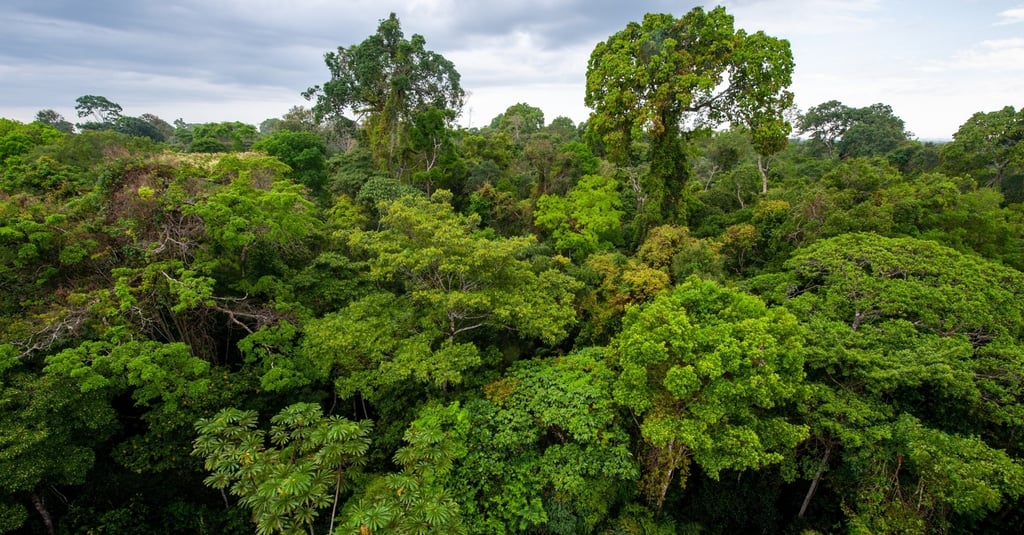
Trees across large areas of the Amazon rainforest are growing taller and thicker as rising levels of carbon dioxide in the atmosphere accelerate plant growth, according to a new study that analyzed long-term data from 188 forest plots across the region.
The research was carried out by a large international team of forest scientists — led by Adriane Esquivel‑Muelbert (University of Birmingham / University of Cambridge) and Rebecca Banbury Morgan (University of Birmingham / University of Bristol) — along with dozens of colleagues from universities and institutes around the world.
The research, published in Increasing tree size across Amazonia in Nature Plants (2025), is based on repeated measurements in 188 mature, long-term forest plots across the Amazon over roughly 30 years. At the “stand level,” the average size of trees — measured by basal area — increased by about 3.3% per decade (95% confidence interval 2.4–4.1%).
Crucially, the increase was not limited to small or young trees. Both small and large trees grew bigger, but in absolute terms the largest stems showed the greatest gains. The number of large trees (those with diameter > 400 mm) also rose at a rate of roughly 6.6% per decade, while smaller stems became less frequent.
Scientists behind the study suggest the most likely driver is the so-called CO₂ fertilization effect — more CO₂ in the atmosphere enables trees to photosynthesize more efficiently, increasing growth and biomass accumulation.
That said, the gains appear confined to intact, mature forests. The data do not cover deforested, heavily logged, burned or fragmented regions, which remain under severe threat.
Researchers warn that the boost may not last indefinitely: factors such as drought, nutrient limitations, extreme weather and land-use change could undermine future growth.
Nopolluting © 2026
Nopolluting is a sustainability media platform that is built to give sustainable businesses a voice. We use our platform and expertise to support entrepreneurs who are doing the hard work of building sustainable businesses and to help them communicate their impact to the world.
Entrepreneurs only
Subscribe to stay ahead with weekly tips on running a more efficient business
We care about your data in our privacy policy.