Why 'Natural' and 'Sustainable' on Your Food Mean Almost Nothing
New research scanning 27,000 supermarket products found that 84% of green claims are self-declared with no independent verification
EDUCATIONGREENWASHINGFEATURED
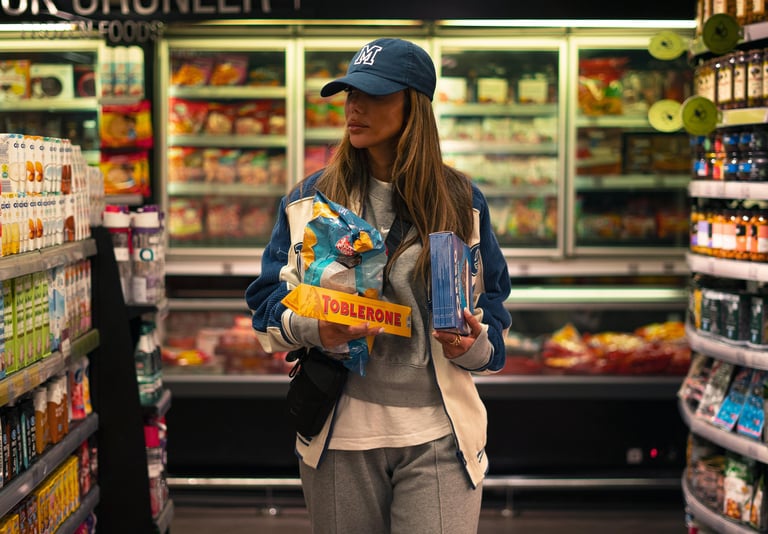

You reach for the product with "natural ingredients" printed across the front. You choose the one that says "sustainably sourced." You feel good about it. You should — you're trying.
But according to a landmark new study, there's an 84% chance that claim was put there by a marketing department, not a certifying body. Nobody checked it. Nobody had to.
The Study
Researchers at the George Institute for Global Health — led by Associate Professor Alexandra Jones, Program Lead for Food Governance and conjoint researcher at UNSW Sydney — scanned more than 27,000 packaged food products sold across Australia's major supermarket chains: Coles, Woolworths, Aldi, IGA, and Harris Farm.
What they found was published simultaneously in two peer-reviewed journals: Public Health Nutrition and Cleaner and Responsible Production.
The headline finding: nearly 4 in 10 packaged food products carry some form of sustainability claim. Across those products, researchers identified 69 different sustainability-related terms in use on labels. The two most common — "natural" and "vegan" — accounted for nearly half of all claims.
Neither term has a legislated definition under Australian law.
84% Unverified
Of all the sustainability claims found on supermarket shelves, only 16% took the form of independently certified logos — marks from third-party bodies with defined standards and accountability measures.
The remaining 84% were self-declared by the manufacturer. No external check. No required evidence. No legal threshold to meet before printing the word on the box.
This is what researchers mean when they talk about greenwashing: the use of environmental or ethical language not to inform consumers, but to appeal to them — without the substance to back it up.
"Natural" and "sustainable" can appear on any product, from any brand, under any conditions — as long as the manufacturer decides to put them there.
Climate Labels Also Had Higher Emissions
The second study produced the most damaging finding of all.
Researchers examined whether products carrying environmental or climate-related claims actually had lower carbon footprints than comparable products without such claims. In categories like meat and confectionery — among the highest-emission food types — the opposite was often true.
Products labeled as climate-friendly had higher carbon emissions than unlabeled products in the same category.
This means that in some cases, the product you're choosing because of its green credentials may be worse for the environment than the one you passed over.
The Regulatory Gap
The problem isn't unique to Australia. In the United States, food labeling responsibility is divided across three federal agencies — and the gap between them is wide.
The FDA regulates around 80% of packaged food labels. Under its framework, a product can be labeled "natural" as long as the manufacturer states it was minimally processed and contains no artificial ingredients. There is no independent check required, and no formal legal definition of the term.
The USDA covers meat, poultry, egg products, and catfish. It has a slightly more specific definition of "natural" for these products — requiring no artificial ingredients and only minimal processing — but as recently as 2024, its Food Safety and Inspection Service only recommended (not required) third-party certification for environmental claims.
The FTC handles food advertising, not labeling — meaning its jurisdiction often stops at the packet itself.
The result is a system where marketing budgets matter more than environmental impact. A small producer genuinely investing in sustainable practices competes on shelf space against a large brand that simply printed the word "natural" on its packaging and moved on.
What You Can Actually Trust
Not all labels are meaningless. The 16% of claims backed by third-party certification represent genuine accountability. Look for:
Rainforest Alliance — covers farming practices, biodiversity, and worker welfare
Marine Stewardship Council (MSC) — independently certified sustainable seafood
USDA Organic — legally defined standards, third-party verified in the US
Fairtrade International — covers supply chain ethics and farmer livelihoods
Non-GMO Project Verified — independent verification for GMO-free claims
If a sustainability claim on a product doesn't come with a recognisable certification logo from an independent body, treat it as a marketing term — because legally, that's all it is.
What Researchers Are Calling For
The George Institute team isn't just describing a problem — they're calling for structural change:
Mandatory legal definitions for terms like "natural," "sustainable," and "eco-friendly"
Required third-party verification before environmental claims can appear on packaging
Standardised disclosure so consumers can meaningfully compare products
Until those rules exist, the burden falls unfairly on shoppers to decode what labels actually mean — while brands face no meaningful consequence for using language that implies more than it delivers.
The Bottom Line
The food industry has learned that sustainability sells. "Natural," "eco-friendly," and "sustainably sourced" are not descriptions — they're marketing strategies, deployed freely because no law prevents it.
Researchers scanned 27,000 products so you don't have to decode every label alone. The finding is clear: unless a claim is certified by an independent body, it is effectively meaningless.
Next time you're in the aisle, don't look for the word. Look for the logo.
Sources
Jones, A. et al. (2026). Sustainability claims on packaged food products in Australian supermarkets. Public Health Nutrition. George Institute for Global Health / UNSW Sydney.
Jones, A. et al. (2026). Environmental label claims and product carbon emissions in supermarket food categories. Cleaner and Responsible Production. George Institute for Global Health / UNSW Sydney.
US Food and Drug Administration (FDA) — food labeling regulations and definition of "natural."
US Department of Agriculture (USDA) / Food Safety and Inspection Service (FSIS) — 2024 guidance on environment-related claims and third-party certification.
Federal Trade Commission (FTC) — Fair Packaging and Labeling Act and food advertising oversight.
National Agricultural Law Center — The Legality of Food Labeling Claims: FDA's Regulations (2022).
This article is based on peer-reviewed research published in May 2026 by the George Institute for Global Health.
Nopolluting © 2026
Nopolluting is a sustainability media platform that is built to give sustainable businesses a voice. We use our platform and expertise to support entrepreneurs who are doing the hard work of building sustainable businesses and to help them communicate their impact to the world.
Entrepreneurs only
Subscribe to stay ahead with weekly tips on running a more efficient business
We care about your data in our privacy policy.