How to Avoid Greenwashing Accusations | Full Guide
Learn how to avoid greenwashing accusations with practical, evidence-based strategies for honest sustainability marketing that builds real trust.
GREENWASHING
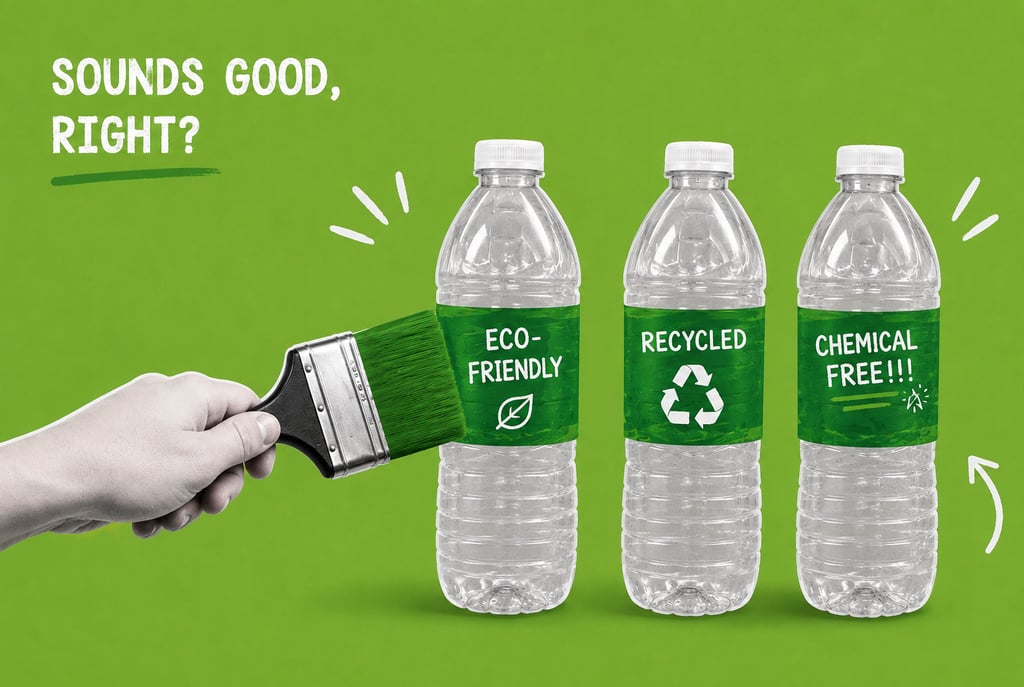
Sustainability has become a business requirement, not a marketing bonus. Customers ask about it. Investors screen for it. Regulators increasingly enforce it. But the same spotlight that rewards genuine environmental effort also exposes anyone who overstates it.
That exposure has a name: greenwashing.
This guide explains what greenwashing is, why accusations are rising, and — most importantly — what a business can actually do to communicate its environmental efforts honestly and credibly. It's written for business owners, marketing teams, and ESG managers who want their sustainability claims to hold up under scrutiny, not just look good in a campaign.
Why Greenwashing Accusations Are Increasing
Three forces are converging to make greenwashing riskier than ever.
Consumer expectations have changed. Buyers, especially younger ones, no longer take environmental claims at face value. A vague label like "eco-friendly" now invites a follow-up question: proof, please.
Regulation is catching up. Bodies like the Federal Trade Commission (FTC) in the United States, the Competition and Markets Authority (CMA) in the UK, and the European Commission have all sharpened their guidance and enforcement around environmental marketing claims in recent years. The EU's Green Claims Directive and Empowering Consumers Directive, for example, are specifically designed to require substantiation behind sustainability marketing before it reaches the public.
Social media accelerates scrutiny. A single unsubstantiated claim in an ad or on packaging can now be screenshotted, fact-checked, and shared within hours. What once might have gone unnoticed in a print brochure can now become a viral case study in corporate dishonesty.
The consequences are real: reputational damage that outlasts the campaign that caused it, legal exposure under advertising and consumer protection law, and — increasingly — direct financial cost, from fines to lost contracts with sustainability-conscious partners.
None of this means businesses should stop talking about sustainability. It means they need to talk about it differently.
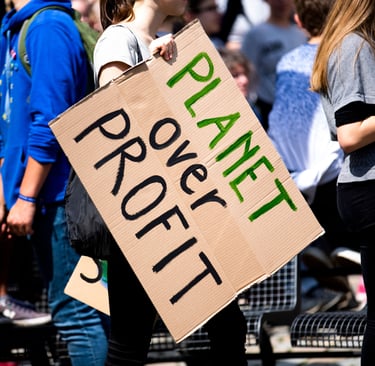
What Is Greenwashing?
Greenwashing is the practice of making an environmental or sustainability claim that is misleading, exaggerated, unsubstantiated, or simply untrue. It can be intentional or accidental, but the effect on the consumer is the same: a false impression of how sustainable a product, service, or company actually is.
Greenwashing doesn't always look like an outright lie. It usually shows up in subtler forms:
Vague language — words like "eco-friendly," "green," or "natural" used without any definition or evidence behind them.
Hidden tradeoffs — highlighting one positive attribute (e.g., recycled packaging) while ignoring a larger negative one (e.g., a carbon-intensive manufacturing process).
Irrelevant claims — emphasizing something that's already legally required or standard across the industry, as if it were a special achievement.
False or misleading certifications — using badges, seals, or labels that suggest third-party verification when none exists, or that come from unaccredited sources.
Lack of evidence — a claim that could be true but isn't backed by any data, report, or documentation the customer can check.
Cherry-picked data — sharing a favorable statistic while omitting the broader context that would change its meaning.
Intentional greenwashing involves knowingly overstating environmental performance for commercial gain. Accidental greenwashing is more common than businesses assume — it usually results from marketing teams using aspirational language without checking it against what operations can actually substantiate.
Both are treated the same way by regulators and by the public. Intent doesn't change the impact of a misleading claim.
Why Businesses Get Accused of Greenwashing
Most companies accused of greenwashing didn't set out to deceive anyone. The pattern is usually more mundane:
Marketing exaggeration — a claim written to sound impressive rather than to be precise.
Poor internal communication — the marketing team doesn't have direct visibility into what sustainability or operations teams are actually doing, so claims drift from reality.
No evidence to point to — the company can't produce a report, dataset, or third-party audit when asked to back up a claim.
Inconsistent practices across the business — a strong sustainability story in one product line while other parts of the operation are left out of the conversation entirely.
Overuse of buzzwords — "sustainable," "green," "clean," and "conscious" used so often, and so loosely, that they stop meaning anything specific.
No measurable results — claiming progress without a baseline, a target, or a way to track change over time.
The common thread is a gap between what's said publicly and what can be shown privately. Closing that gap — not simply toning down the language — is the actual fix.
10 Practical Ways to Avoid Greenwashing
1. Use Measurable Claims
Explanation: Replace vague adjectives with specific, checkable numbers or facts wherever possible.
Example: Instead of "we use less plastic," a business might say "we reduced single-use plastic packaging by switching to recycled cardboard for 80% of our shipments in 2025."
Why it works: A measurable claim can be verified. A vague one can't — which is exactly what invites skepticism.
Common mistake: Publishing a percentage or target without stating the baseline it's measured against.
Action to take today: Audit your current marketing materials and flag every claim that uses a vague adjective ("green," "eco," "sustainable") with no number or fact attached.
2. Publish Evidence
Explanation: Back up claims with documentation — reports, third-party audits, supplier data, or a public sustainability page — that customers and journalists can actually check.
Example: A hotel claiming water conservation efforts can publish year-over-year water usage data, not just a statement that it "cares about water."
Why it works: Evidence shifts a claim from "trust us" to "see for yourself," which is a fundamentally stronger position with both regulators and consumers.
Common mistake: Producing evidence internally but never making it accessible to the public.
Action to take today: Identify one sustainability claim currently on your website or packaging and locate — or create — the evidence file behind it.
3. Show Your Process, Not Just Your Outcomes
Explanation: Customers increasingly want to see how a result was achieved, not just the polished end claim.
Example: A fashion brand can show behind-the-scenes footage of its supply chain, including where fabric is sourced and how it's processed, rather than simply stating "ethically made."
Why it works: Process transparency is much harder to fake than a finished claim, so it builds more credibility.
Common mistake: Treating sustainability communication as a single finished statement instead of an ongoing story.
Action to take today: Document one part of your operational process (sourcing, production, packaging, delivery) that you haven't shared publicly yet.
4. Admit Imperfections
Explanation: No business is 100% sustainable. Acknowledging where you fall short — and what you're doing about it — is more credible than claiming perfection.
Example: A manufacturer might state publicly that it hasn't yet eliminated a particular material, while explaining the timeline and steps toward doing so.
Why it works: Consumers are more skeptical of flawless claims than of honest, in-progress ones. Perfection reads as marketing; imperfection reads as candor.
Common mistake: Hiding known weaknesses out of fear that disclosure will hurt the brand — when in most cases, silence is riskier than honesty.
Action to take today: Write down one area where your sustainability efforts are still incomplete, and describe your plan to address it.
5. Update Information Regularly
Explanation: Sustainability claims tied to old data or outdated practices become misleading even if they were accurate when first published.
Example: A restaurant that switched suppliers should update its sourcing page rather than leaving old supplier names and claims in place.
Why it works: Regular updates signal an active, ongoing commitment rather than a one-time marketing exercise.
Common mistake: Publishing a sustainability page once and never revisiting it.
Action to take today: Set a recurring calendar reminder — quarterly or biannually — to review and refresh sustainability claims across your website and marketing.
6. Avoid Vague Language
Explanation: Words like "green," "eco-friendly," "natural," and "clean" carry no legal or scientific definition on their own. Used without context, they function as decoration rather than information.
Example: Instead of "made with eco-friendly materials," specify which materials, in what proportion, and what makes them lower-impact than the alternative.
Why it works: Precise language can be checked; vague language can only be believed or doubted.
Common mistake: Assuming a term is "obviously" true for the industry without ever defining it for the customer.
Action to take today: Create a short internal glossary defining exactly what your company means by any sustainability term it uses publicly.
7. Use Third-Party Verification Where Appropriate
Explanation: Independent verification — audits, certifications, or transparent membership programs — adds credibility that self-reported claims can't achieve alone.
Example: Organizations like B Corp, the Science Based Targets initiative (SBTi), and CDP offer frameworks that require businesses to substantiate claims against external standards.
Why it works: A claim verified by an outside party is inherently harder to dismiss as marketing spin.
Common mistake: Using a certification logo the company hasn't actually earned, or that comes from an unaccredited source — a form of greenwashing in itself.
Action to take today: Research which recognized frameworks or transparency programs are relevant to your industry and size.
8. Train Marketing Teams on Sustainability Facts
Explanation: Marketing and sustainability functions often operate separately. Without shared training, marketing teams can unintentionally overstate what operations teams can support.
Example: A joint quarterly briefing where the sustainability lead walks the marketing team through what's currently accurate to claim — and what isn't yet.
Why it works: Most accidental greenwashing originates from a communication gap, not from bad intent. Closing that gap prevents the problem at the source.
Common mistake: Leaving sustainability claims entirely in the hands of copywriters with no operational context.
Action to take today: Schedule a working session between your marketing and sustainability (or operations) teams to align on current, accurate claims.
9. Keep Sustainability Consistent Across Operations
Explanation: A strong sustainability claim in one part of the business loses credibility if other parts contradict it.
Example: A retailer promoting a "sustainable collection" while the rest of its product line uses significantly less scrutinized materials invites accusations of selective marketing.
Why it works: Consistency signals that sustainability is a genuine operating principle, not a marketing segment.
Common mistake: Treating sustainability as a single product line or campaign rather than a company-wide commitment in progress.
Action to take today: Map which parts of your business are currently included — and excluded — from your public sustainability story, and note the gap honestly.
10. Invite Public Accountability
Explanation: Giving customers, journalists, or auditors a way to check claims — rather than just asserting them — is one of the strongest signals of genuine transparency.
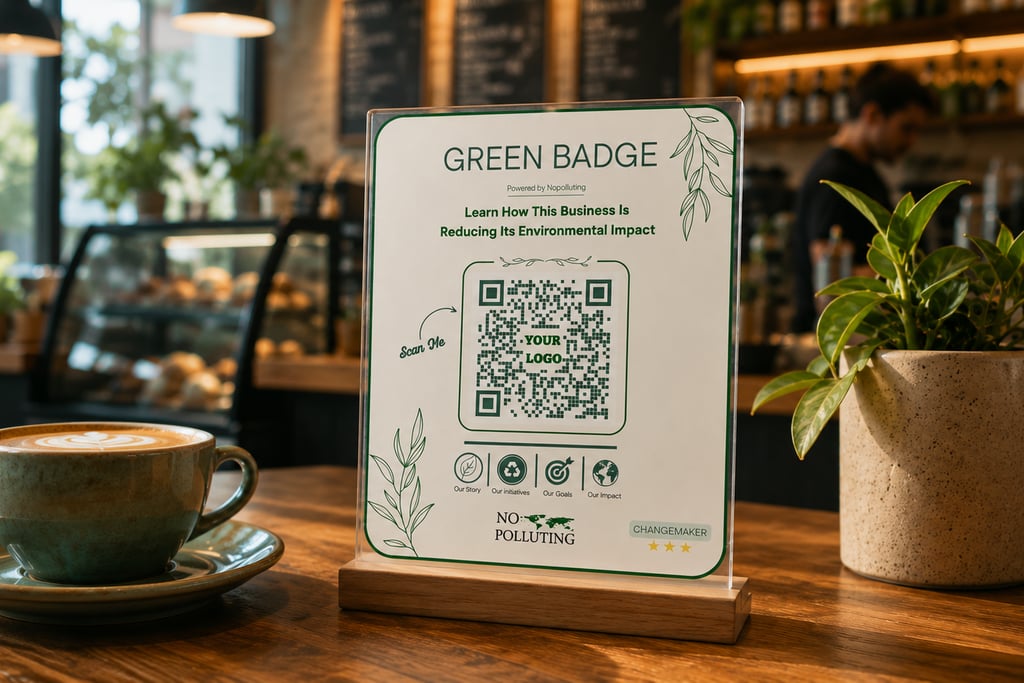
Example: A public profile page documenting sourcing, waste reduction, and ongoing improvements, accessible via a QR code or direct link, lets anyone verify what's being claimed.
Why it works: Accountability mechanisms shift the relationship from "trust our marketing" to "check our record."
Common mistake: Treating sustainability communication as one-directional — broadcast only, with no channel for scrutiny or feedback.
Action to take today: Identify one channel (a public page, a report, a review system) where customers could verify a claim you currently make without evidence attached.
Real Examples: What Businesses Can Learn
A number of well-known cases illustrate how greenwashing accusations happen — and what tends to follow.
Automotive emissions claims. In 2015, Volkswagen was found to have installed software that manipulated emissions testing results, allowing vehicles marketed as "clean diesel" to pass regulatory tests while emitting far more pollution in real-world driving. The case became one of the most cited examples of a gap between marketed environmental performance and actual performance, resulting in significant regulatory penalties and long-term reputational damage.
Fashion sustainability lines. H&M's "Conscious Collection" faced scrutiny, including from Norway's Consumer Authority, over claims about the environmental impact of certain garments that regulators found were not adequately substantiated. The case is frequently referenced as an example of how a well-intentioned sustainability sub-brand can still draw accusations if the underlying claims outpace the evidence.
Recyclability claims. Keurig Canada was fined by Canada's Competition Bureau after regulators found that claims about the recyclability of its single-use coffee pods were not accurate in the real-world conditions most municipal recycling systems could actually handle.
Carbon-neutral claims. Several companies across different industries have faced challenges — from advertising standards bodies and consumer groups alike — over "carbon neutral" claims based heavily on offsets rather than direct emissions reduction, without clearly explaining the distinction to consumers.
What these cases share is not necessarily bad intent, but a mismatch between the confidence of the claim and the strength of the evidence behind it. In each case, the reputational cost came not from having imperfect sustainability performance — nearly every company does — but from overstating it.
What Customers Look For Today
Modern consumers evaluating a sustainability claim tend to look for:
Transparency — a willingness to share both strengths and limitations.
Evidence — data, documentation, or third-party validation.
Visual proof — photos or behind-the-scenes content showing real operations, not stock imagery.
Reports — accessible summaries of progress, even if informal.
Supply chain information — where materials come from and how they're sourced.
Recognized certifications or transparency programs — from credible, accountable sources.
Regular updates — evidence that the effort is ongoing, not a one-time announcement.
Progress, not perfection — a credible trajectory matters more than a flawless present.
Why Transparency Builds Trust
There's a simple psychological reason honesty tends to outperform polish in sustainability marketing: consumers have learned to treat overly confident claims as a red flag rather than a reassurance.
When a business admits an imperfection alongside a genuine effort, it signals something a flawless claim can't: that the information is coming from an operational reality, not a marketing script. This is consistent with broader research on consumer trust, which generally finds that perceived honesty — including the willingness to disclose limitations — is a stronger driver of long-term brand trust than the underlying performance metric itself.
In practice, this means the businesses that fare best aren't necessarily the most sustainable ones. They're the most honest ones about where they currently stand and where they're headed.
Greenwashing Checklist
Use this checklist before publishing any sustainability claim:
Does this claim use specific, measurable language instead of vague adjectives?
Can we point to evidence — data, a report, or documentation — that supports this claim?
Have we defined any sustainability terms we're using (e.g., "eco-friendly," "sustainable")?
Does this claim reflect the whole business, or only a curated part of it?
Have we disclosed relevant limitations or tradeoffs, not just the positive result?
Is any certification or badge referenced one we've actually earned from a legitimate source?
Has this claim been reviewed by someone with direct operational knowledge, not just marketing?
Is this information current, or based on outdated data or practices?
Is there a way for a customer or journalist to independently verify this claim?
Would we be comfortable explaining and defending this claim in detail if asked?
Myths vs. Facts
MythFact"Eco-friendly" is safe marketing languageVague terms without evidence are one of the most common triggers for greenwashing accusationsOnly large corporations get accused of greenwashingSmall and medium businesses are increasingly scrutinized, especially on social mediaAdmitting flaws will hurt the brandDisclosing limitations alongside genuine effort tends to build more trust than flawless claimsA certification logo is always credibleSome certifications are unaccredited or self-issued; the source mattersCarbon offsets are the same as emissions reductionOffsets and direct reduction are different, and consumers increasingly expect the distinction to be explainedSustainability marketing is a one-time projectClaims need regular updates to remain accurate as practices and data change
Frequently Asked Questions
What is greenwashing? Greenwashing is when a business makes an environmental or sustainability claim that is misleading, exaggerated, vague, or unsubstantiated. It can be intentional or the result of poor communication between marketing and operations teams, but the impact on consumer trust is the same either way.
Why is greenwashing harmful? Greenwashing misleads consumers, undermines genuinely sustainable businesses by making all environmental claims harder to trust, and exposes companies to reputational, legal, and financial risk from regulators, journalists, and the public.
How can companies avoid greenwashing? Companies avoid greenwashing by using measurable, specific claims; publishing supporting evidence; maintaining consistency across their operations; training marketing teams on sustainability facts; and being transparent about both progress and limitations.
What evidence should businesses provide for sustainability claims? Businesses should provide data, reports, supplier information, third-party audits, or certifications from credible sources. The evidence should be specific enough that a customer or journalist could verify the claim independently.
What are the most common greenwashing mistakes? The most common mistakes are using vague language without definitions, making claims with no supporting evidence, highlighting one positive attribute while hiding a larger negative one, and using unearned or unaccredited certification logos.
How can consumers verify sustainability claims? Consumers can look for specific data rather than adjectives, check whether certifications come from recognized and accredited bodies, look for publicly accessible reports or supply chain information, and be cautious of claims with no evidence attached.
What should companies never say in sustainability marketing? Companies should avoid absolute claims like "100% sustainable" or "zero impact" unless they can fully substantiate them, since these are the claims most likely to be challenged by regulators or the public.
Is greenwashing illegal? In many jurisdictions, yes — misleading environmental claims can violate consumer protection and advertising law. Regulators such as the FTC in the US and the CMA in the UK actively investigate and penalize unsubstantiated environmental marketing.
What's the difference between greenwashing and honest marketing mistakes? Intent can differ, but regulators and consumers generally judge the impact of a claim, not the intent behind it. A well-meaning but unsubstantiated claim is still treated as greenwashing if it misleads.
Do small businesses need to worry about greenwashing accusations? Yes. Social media has made it easy for any business, regardless of size, to face public scrutiny over a single unsubstantiated claim. Being small doesn't reduce the risk — it can reduce the resources available to respond to it.
What is the role of third-party certification in avoiding greenwashing? Third-party certification and transparency frameworks add independent credibility to claims that would otherwise rely solely on self-reporting. Their value depends heavily on the credibility and accountability of the certifying body.
How often should sustainability claims be updated? Sustainability claims should be reviewed and updated at least quarterly or biannually, since outdated data or practices can turn a once-accurate claim into a misleading one.
Can admitting sustainability shortcomings hurt a brand? Generally, no — most consumer trust research suggests the opposite. Disclosing limitations alongside genuine progress tends to build more credibility than claiming perfection, since flawless claims are often met with skepticism.
What organizations set standards for sustainability claims? Organizations including the UN, OECD, European Commission, ISO, IPCC, CDP, and the Science Based Targets initiative all contribute frameworks, guidance, or standards relevant to environmental claims and corporate sustainability reporting.
How does life cycle assessment relate to greenwashing? A life cycle assessment (LCA) evaluates a product's environmental impact across its entire life span — from raw material sourcing to disposal — rather than a single stage. Claims based on only one stage (e.g., recyclable packaging) while ignoring others (e.g., a carbon-intensive manufacturing process) are a common form of greenwashing.
What is the fastest way to start avoiding greenwashing today? Audit existing marketing materials for vague sustainability language, and for each claim found, either attach specific evidence or remove the claim until that evidence exists.
Conclusion
Avoiding greenwashing accusations isn't about saying less — it's about saying only what can be shown. The businesses that navigate this successfully treat sustainability communication the way they'd treat any other factual claim: specific, evidenced, and open to scrutiny.
That means replacing vague language with measurable claims, publishing evidence rather than just asserting it, admitting where progress is still underway, and keeping the story consistent across the whole business — not just the parts that photograph well.
None of this requires perfection. It requires honesty about where a business currently stands, paired with a visible, ongoing effort to improve. That combination — progress over perfection, evidence over adjectives — is what separates credible sustainability communication from greenwashing.


A Transparent Way to Tell Your Sustainability Story
Many businesses that are genuinely making progress on sustainability still struggle with exactly the problem this article has covered: how to communicate that progress without overstating it, and without the claims getting lost in vague language nobody trusts.
This is the gap Green Badge is built to close.
Green Badge is not a certification. It's a public transparency platform, hosted on Nopolluting, where businesses document their sustainability journey in detail — renewable energy use, waste reduction, ethical sourcing, water conservation, and the ongoing improvements still in progress. Rather than issuing a one-time seal of approval, Green Badge gives businesses a public profile, accessible via a QR code, where customers can see the actual story behind the claims: what's been done, what's underway, and what's still ahead.
That structure reflects the core idea in this guide: transparency, not perfection, is what builds trust. A Green Badge profile isn't a statement that a business has "arrived" at sustainability — it's a documented, ongoing record that lets customers judge the effort for themselves.
If your business is doing real sustainability work and wants a clearer, more credible way to communicate it, applying for Green Badge is a practical next step toward telling that story with the kind of transparency this article has outlined.
Nopolluting © 2026
Nopolluting is a sustainability media platform that is built to give sustainable businesses a voice. We use our platform and expertise to support entrepreneurs who are doing the hard work of building sustainable businesses and to help them communicate their impact to the world.
Entrepreneurs only
Subscribe to stay ahead with weekly tips on running a more efficient business
We care about your data in our privacy policy.